
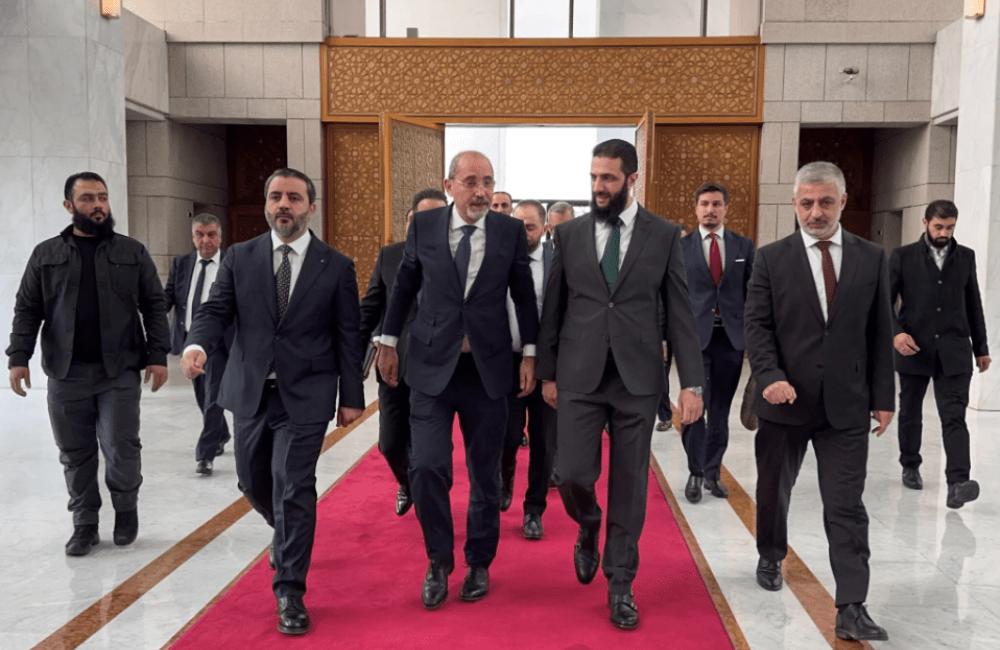
[The recent diplomatic] visits underscore the emerging consensus among Arab states to support Syria’s reconstruction and political transition.
Syafruddin Arsyad | Oped Column Syndication
The recent ousting of Bashar al-Assad marks a historic turning point for a nation long mired in conflict and international isolation. With a flurry of high-profile diplomatic engagements and promises of regional cooperation, the winds of change in Damascus could redefine Syria’s trajectory and its role in the Middle East.
A NEW CHAPTER IN REGIONAL DIPLOMACY
This week, Damascus hosted senior diplomats from Jordan and Qatar, signaling a concerted effort to repair fractured ties and foster regional solidarity. These visits underscore the emerging consensus among Arab states to support Syria’s reconstruction and political transition.
Jordanian Foreign Minister Ayman Safadi’s meeting with Sharaa was particularly symbolic. As the first visit by a high-ranking Jordanian official since Assad’s removal, it underscored Amman’s commitment to helping Syria rebuild.
Discussions spanned a broad spectrum of issues—from trade and border management to drafting a new constitution that prioritizes inclusive governance. Safadi’s emphasis on non-interference from external powers reflects a broader regional aspiration for Syria’s sovereignty and stability.
Qatar’s re-engagement, led by Mohammed al-Khulaifi, marked another milestone. The resumption of diplomatic ties and Qatar Airways flights to Damascus after 13 years signify a willingness to rebuild trust. Qatar’s offer to assist in restoring Damascus International Airport—a crucial hub for Syria’s reintegration into the global economy—highlights the practical steps being taken to facilitate Syria’s recovery.
For a nation that has endured more than a decade of devastation, these early signs of hope may herald the dawn of a new era—one defined not by conflict, but by cooperation and renewal.
Related Posts
TACKLING PRESSING CHALLENGES
Syria’s recovery hinges on addressing critical issues that have plagued the region for years. One such issue is the illicit captagon trade, which flourished under Assad and became Syria’s largest export. Saudi Arabia, among the most vocal opponents of the drug trade, has reportedly engaged with Sharaa’s government to curtail smuggling operations.
For Jordan, which has faced significant challenges from cross-border smuggling, these efforts are vital for regional security and economic stability.
Iran, a key ally of the Assad regime, has yet to establish direct contact with the new leadership. While Tehran’s foreign ministry has reiterated its support for Syria’s sovereignty, it remains cautious, likely assessing how Sharaa’s policies will align with its strategic interests. This cautious stance contrasts with the enthusiasm from Arab states, reflecting shifting regional dynamics.
SHIFTING ALLIANCES AND THE ROAD AHEAD
Ahmed al-Sharaa’s leadership presents a delicate balancing act. As the leader of Hayat Tahrir al-Sham (HTS), a group with roots in Al-Qaeda, Sharaa faces the dual challenge of moderating HTS’s image and positioning it as a legitimate political entity. His efforts to engage with regional and international stakeholders reflect a pragmatic approach to navigating Syria’s complex political landscape.
At a recent summit in Jordan, representatives from Arab states, Turkey, the EU and the U.S. called for an inclusive and peaceful transition in Syria. The message was clear: stability, reconstruction and combating illicit activities like drug trafficking must take precedence. For Sharaa, meeting these expectations will require deft diplomacy and a commitment to reform.
A PIVOTAL MOMENT FOR SYRIA
The diplomatic momentum generated after the fall of Assad offers a rare opportunity for Syria to emerge from the shadows of war and autocracy. Regional actors have signaled their willingness to support this transition, but the path ahead is fraught with challenges—from rebuilding war-torn infrastructure to addressing deep-seated political and social divisions.
As Syria embarks on this new chapter, its leadership will be under intense scrutiny. Success will depend on Sharaa’s ability to build trust, foster inclusivity and deliver tangible results for the Syrian people.
Syafruddin Arsyad is an independent researcher focusing on the latest current affairs in the Middle East and their impacts on other regions of the world, including Southeast Asia.
 OPED COLUMN